It Was Never About the Dishes: Decoding the Small Fights That Keep Coming Back
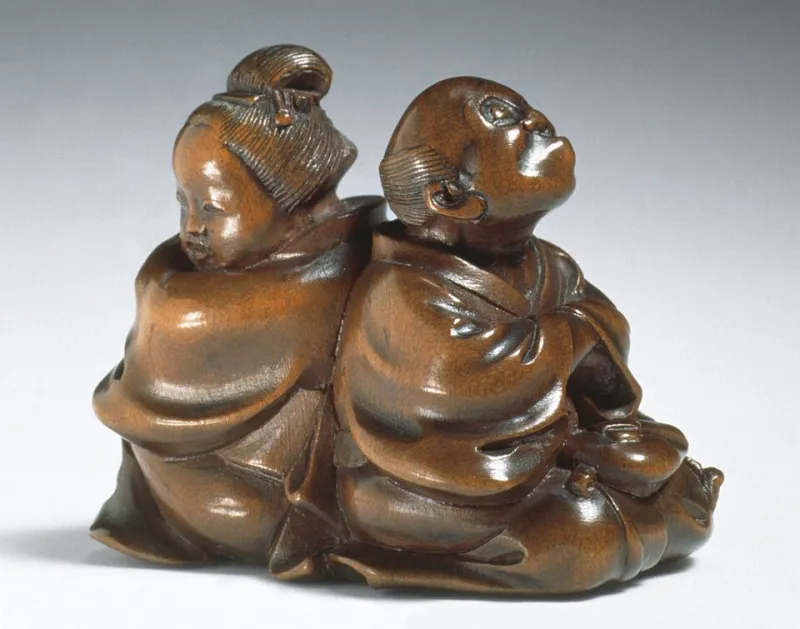
Photo: Meikeisai Hōjitsu (Japan, died 1872), Public domain, via Wikimedia Commons
Every couple has one. The fight that shows up like a monthly subscription — no warning, no apparent trigger, and somehow the same ending every time.
Maybe yours is about the dishes left in the sink. Maybe it's the 'wrong' way to get to the airport. Maybe it's the tone of a two-word text reply. On the surface, these arguments are laughably small. But if you've been in one, you know they don't feel small. They feel loaded. And that's because they are.
Here's the reframe that changes everything: the fight is never about the topic. It's about what the topic represents.
The Dishwasher Is a Messenger
Take the classic dish dispute. Partner A loads the dishwasher. Partner B says it doesn't matter. Partner A hears 'what you do doesn't matter,' and suddenly we're not talking about dishes anymore — we're talking about feeling invisible.
Or the GPS fight. One person questions the route, the other gets defensive, and twenty minutes later someone's saying 'fine, YOU navigate.' What was actually being argued about? Control, competence, respect. Who gets to be trusted. Who feels second-guessed.
Then there's the famous 'whatever.' It looks like surrender. It's usually a white flag made of exhaustion — a signal that someone has decided arguing isn't worth it because they don't believe it will change anything. That's not peace. That's resignation, and it stings worse than yelling.
Underneath almost every recurring small fight, you'll find one of a handful of deeper questions:
- Do I matter to you? (feeling valued, seen, prioritized)
- Do you hear me? (feeling understood, not dismissed)
- Am I safe with you? (feeling respected, not criticized or controlled)
- Are we a team? (feeling like partners, not opponents)
When you fight about the dishes, you're rarely fighting about dishes. You're fighting about one of those questions — often without realizing it yourself.
Why the Same Fight Keeps Coming Back
Recurring arguments are loops, and loops need fuel. The fuel is usually a pattern that looks like this:
- Something small happens (a sigh, a forgotten errand, a sink full of pans).
- One partner assigns it meaning ('they don't care').
- They react to the meaning, not the moment — maybe with criticism or withdrawal.
- The other partner defends or shuts down.
- Nobody's original need gets named, so nothing gets resolved.
- The need stays unmet, guaranteeing round two.
Couples researchers have found that the majority of relationship conflicts are perpetual — they don't get 'solved' so much as navigated. The couples who thrive aren't the ones who never fight about the dishes. They're the ones who can talk about what the dishes mean without turning it into a courtroom.
The Pause: A 60-Second Move for Mid-Argument
The hardest part of breaking the loop is that it happens in real time. Your nervous system is flooded, your ears are half-closed, and the words coming out are not your best work. So don't try to fix the whole relationship mid-spat. Just try this:
Pause and ask yourself one question: 'What am I actually upset about right now?'
Not 'who's right.' Not 'why are they like this.' Just: what's the need under my frustration?
- 'I'm upset that I feel like the only one who notices this stuff.'
- 'I'm upset that I feel corrected in front of the kids.'
- 'I'm upset because I tried to help and it got picked apart.'
If you can name it, you can say it. And here's the magic: the better question underneath the argument is almost always a bid for connection, not a point in a debate.
Asking the Better Question Out Loud
Once you've paused, try swapping the argument for the question underneath. Instead of:
- 'Why do you never load the dishwasher right?' → 'Can you tell me you see how much I'm doing around here? I'm feeling unseen.'
- 'We should've taken the other route.' → 'When you second-guess me, I feel like you don't trust my judgment.'
- 'Whatever.' → 'I'm not fine, actually. I've stopped arguing because I don't think it changes anything, and that scares me.'
Will this feel awkward the first time? Absolutely. It's like switching from yelling across the room to speaking quietly up close — it takes practice before it feels natural. But you'd be amazed how quickly a 'whatever' defuses when the response is 'okay, talk to me. What's really going on?'
A Note for the Partner Who Doesn't Get What the Big Deal Is
If you're the one who genuinely doesn't understand why the dishes matter — you're not the villain, and neither is your partner. But 'it's just dishes' misses the point the way 'it's just a text message' does. The trigger is small; the meaning isn't. Your job isn't to agree that the dishes matter. Your job is to care that your partner matters, and to show it in a way they can feel.
Sometimes the most powerful sentence in a recurring fight is simply: 'I don't fully get it yet, but I get that it matters to you, and I want to.'
When the Loop Won't Break
Some loops are so worn-in that both partners hear the old argument before a word is spoken. If you've tried naming the deeper need and keep landing back in the same ditch, that's not a sign your relationship is doomed — it's a sign the loop has a history, and history often needs a third party.
A couples therapist is essentially a translator for these fights. We sit in the middle of the dish dispute and help both people hear what's actually being said underneath. It's some of the most meaningful work we do, because the moment a couple realizes they've been fighting about the same wound for years — and that the wound is healable — something loosens.
The dishes will still need doing. The GPS will still reroute. But when the fight underneath the fight finally gets spoken out loud, those small things can go back to being small things.
And that's when you remember why you liked each other in the first place.