Just Three Minutes: How to Outsmart the Freeze That Keeps You Stuck

Photo: Shixart1985, CC BY 2.0, via Wikimedia Commons
You know the feeling. The email you've been meaning to send sits there for nine days. The stack of mail on the kitchen counter has quietly become furniture. You have a therapy homework assignment — maybe a simple journaling prompt — and somehow it's been "tomorrow's project" for two weeks.
If you're juggling a job, kids, aging parents, and a dentist appointment you keep rescheduling, it's tempting to call this being busy. But often it's something else entirely: overwhelm so complete that starting anything feels impossible. The good news? There's a trick so simple it sounds fake — and it works because of how your brain is wired, not in spite of it.
Why Your Brain Says No to Big Asks
When you look at a large or emotionally loaded task, your brain runs a quick cost-benefit analysis. A vague, sprawling project — "deal with the insurance claim," "fix things with my sister," "catch up on everything" — doesn't come with clear steps, so your nervous system reads it as a threat with no exit route. Enter the freeze response: the same survival mechanism that makes a deer stand perfectly still in headlights.
"People assume procrastination is a motivation problem," therapists often explain to clients. "It's usually a threat-detection problem. The task feels too big to survive in one sitting, so the brain postpones the discomfort instead of the task."
That's why willpower pep talks fall flat. You can't argue with a smoke alarm. You have to show it there's no fire — and the fastest way to do that is to make the task laughably small.
The Three-Minute Rule, Explained
The concept is exactly what it sounds like: commit to doing the task for three minutes. Not until it's done. Not until you've made "real progress." Three minutes, then you're free to stop.
Why three? It's short enough that your brain doesn't register it as a threat, but long enough to break the freeze. Most of the friction in any task lives at the starting line — finding the stamp, opening the laptop, lacing the shoes. Once you're moving, momentum tends to carry you well past the timer. But here's the part that makes it sustainable: you have to genuinely mean it when you say you can stop. If three minutes is a bait-and-switch, your brain learns not to trust you.
Try applying it to the usual suspects:
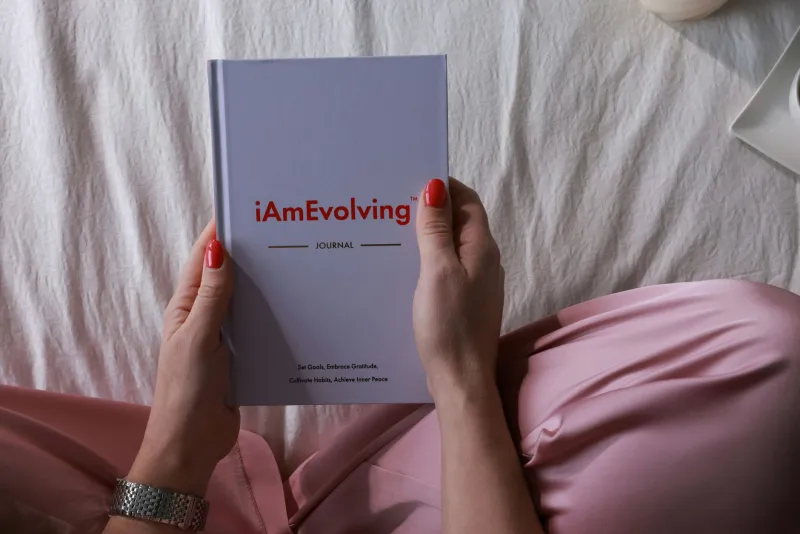
- Therapy homework. Instead of "journal about my week," set a timer for three minutes and write one sentence. That's it.
- The mail pile. Three minutes of sorting. You don't have to finish — you just have to shrink the pile.
- That hard text. Three minutes to open the thread and type one honest line.
- Exercise. Three minutes of stretching counts. It genuinely does.
What Your Avoidance Style Is Telling You
We all freeze a little differently. Take this quick quiz — count your A's, B's, and C's — to figure out your pattern and which version of the rule will help most.
1. When a big task lands on your plate, your first move is usually:
- A) Researching it endlessly — tabs open, notes made, nothing actually started
- B) Cleaning something else, because suddenly the garage really needs organizing
- C) Numbing out — scrolling, snacking, one more episode
2. The tasks you avoid most tend to be:
- A) Ones where you might do it "wrong"
- B) Ones that are boring or tedious
- C) Ones that bring up feelings
3. When you finally start, you usually feel:
- A) Relieved, but only after triple-checking everything
- B) Surprised it wasn't as bad as you thought
- C) Emotional, like you'd been holding your breath
Mostly A's — The Perfectionist Freezer. Your brain resists tasks it can't guarantee. Use the three-minute rule to produce something deliberately imperfect: a rough draft, a messy first attempt, a "bad" version. Rename it in your head: "This is the terrible first pass."
Mostly B's — The Boredom Dodger. Tedium is your kryptonite. Pair your three minutes with something pleasant — a favorite playlist, a fancy coffee, a race against the microwave timer. Novelty makes the start line easier to cross.
Mostly C's — The Emotion Avoider. The task isn't the problem; the feelings attached to it are. Give yourself three minutes plus a landing pad: set the timer, do the thing, then spend another three minutes decompressing — stepping outside, texting a friend, breathing. You're teaching your nervous system that the discomfort has an ending.
Shrink It Until It's Silly
If three minutes still feels too big, go smaller. "Write the thank-you note" becomes "get the notecard out of the drawer." "Call the therapist's office" becomes "look up the phone number." This isn't coddling yourself — it's strategic. Every tiny completed action sends your brain the same message: we're safe, we're capable, we can move.
And if you do only three minutes and stop? That's still a win. You've broken a freeze pattern, collected proof that starting is survivable, and left a smaller task for tomorrow. In our line of work, we call that progress — not a consolation prize.
Overwhelm convinces you that everything requires everything. Three minutes is how you find out that's a lie.